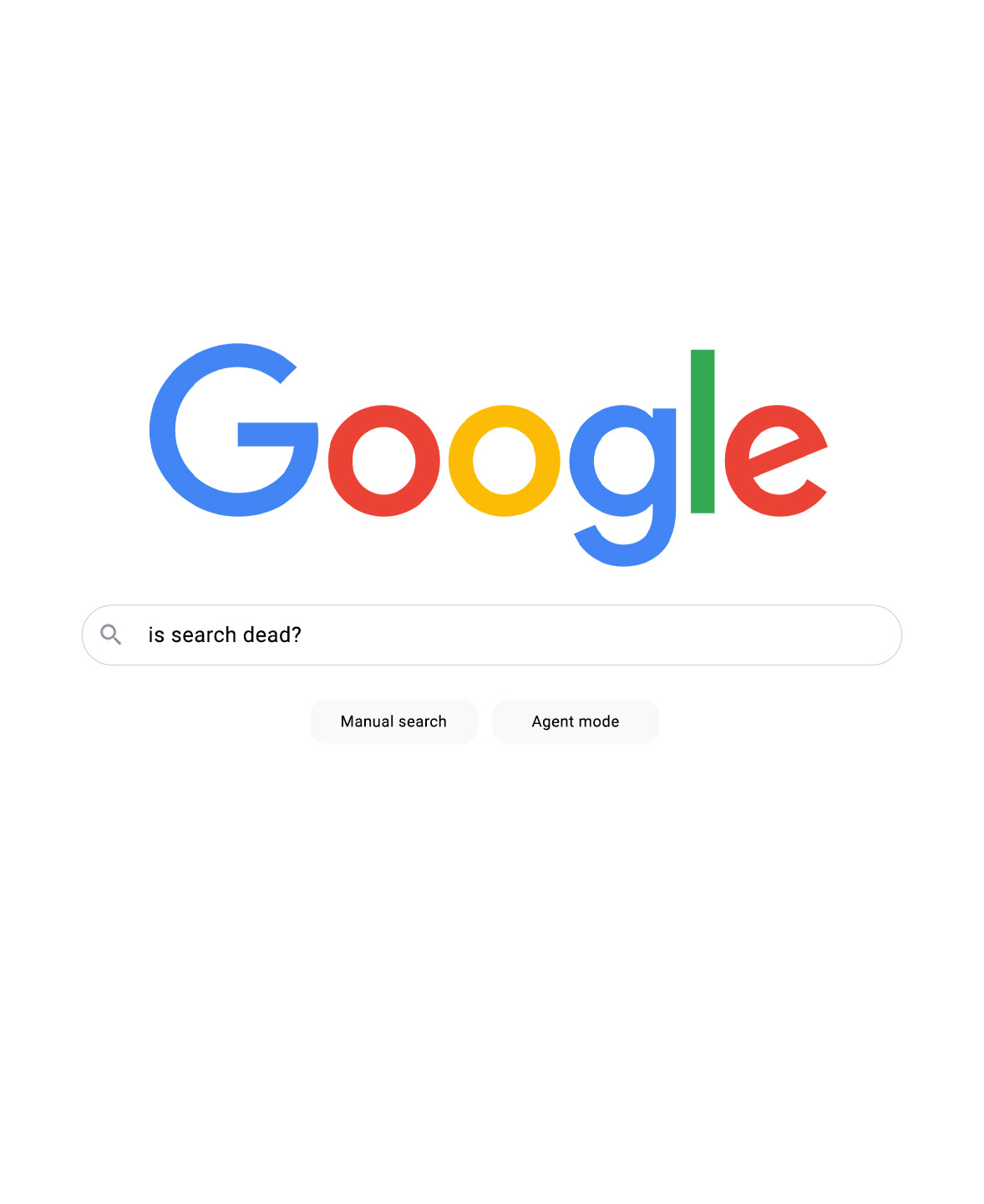
SEO has always been an unrelenting pursuit of success. Since the public launches of large language models such as ChatGPT, a lot has been said about AI search and the importance of appearing within AI-generated answers, with much of the early SEO commentary being speculative and often serving more as click-bait than practical guidance. Many were quick to make bold claims about how to “rank for AI” and tips for success, but in reality, they were chasing views, making wild guesses, just like the rest of us.
Previously, there were a number of people who believe that Google was deliberately slowing down the usefulness of its own results – not breaking it, but dulling. The logic is simple: if users find what they want immediately, they click fewer ads. For an advertising-based business, that is a big problem. So, weaker results equal more repeated searches, which keeps the ad machine turning.
Recently, however, there has been a shift… search is changing.
AI arrived.
Not only does it answer the simple questions that make up around eight per cent of Google’s search traffic, it introduces ‘agent modes’ that can conduct deep research on your behalf. These agents often run for fifteen minutes or more, doing the sort of work a human researcher might spend one full day completing (OpenAI’s recently released ‘Atlas’ browser pushes this even further). ChatGPT now sits beside your browsing session, reading pages, interpreting content and stepping in whenever you need it.
This is the real shift. Search begins to feel less like typing into a box and more like delegating to an assistant.
If you want to find a budget-friendly car, you can simply ask the agent to compare the market and return with recommendations. We recently used an agent to choose a new studio camera. It sifted through hundreds of options, identified the best fit for our specific use-case, explained its reasoning, and then located the best price.
For these agents to work well, they must understand businesses and their products. At the moment, they rely partly on traditional search engines such as Google, but they are also building their own vast knowledge bases. This means, if you want to be recognised and promoted by these agents, your content and data need to be clear, structured and easily crawled by the new generation of AI systems.
Early guidance from the industry suggests that “AI-ready content” is becoming essential. This includes:
- clear product descriptions
- structured date and schema
- factual, unambiguous explanations
- pages that cover benefits, pricing and comparisons
- content that is written for humans but easy for machines to interpret
SEO will always remain a cat and mouse game. Search providers want to explain what works, but if they reveal too much, the system becomes open to manipulation. Algorithms will continue to shift, and gaming the system will become harder.
What is emerging now is now the end of search, but the end of manual search. Most searches will soon begin with a phrase like “Ask my agent to find…” rather than typing a query into a browser. AI agents will be the first audience for your content, and businesses that prepare for this shift early will be discovered more accurately and more often.